·
Insights
Blog
latest_articles
RSS·
·
·

The debate is everywhere right now: is the convenience of artificial intelligence actually ruining our programming skills?
My take on this is simple: it depends entirely on how you use it. I am not against AI, and I am certainly not against young developers using AI to step into the world of software development. It lowers the barrier to entry and makes learning new concepts incredibly accessible.
However, there is a growing trend that I really don't like, and it's called "vibe coding."
Let’s break down what is happening to our brains, why we need to be careful in production environments, and how we can keep our coding skills sharp.
The term "vibe coding" was recently popularized to describe a workflow where developers just use natural language to tell an AI what they want, blindly copy-pasting the output, and tweaking it until it "looks" right,. You basically "give in to the vibes" and let the AI do all the actual typing and thinking.
While this sounds like magic for a quick weekend prototype, it creates a massive problem: the illusion of competence.
When you vibe code, you don't actually understand the code you are writing. You are skipping the productive struggle of figuring out how a system works under the hood. For beginners, this can lead to "cognitive offloading," where your brain stops actively problem-solving because the AI is doing the heavy lifting. Over time, this causes your critical thinking skills and basic syntax memory to fade away,.
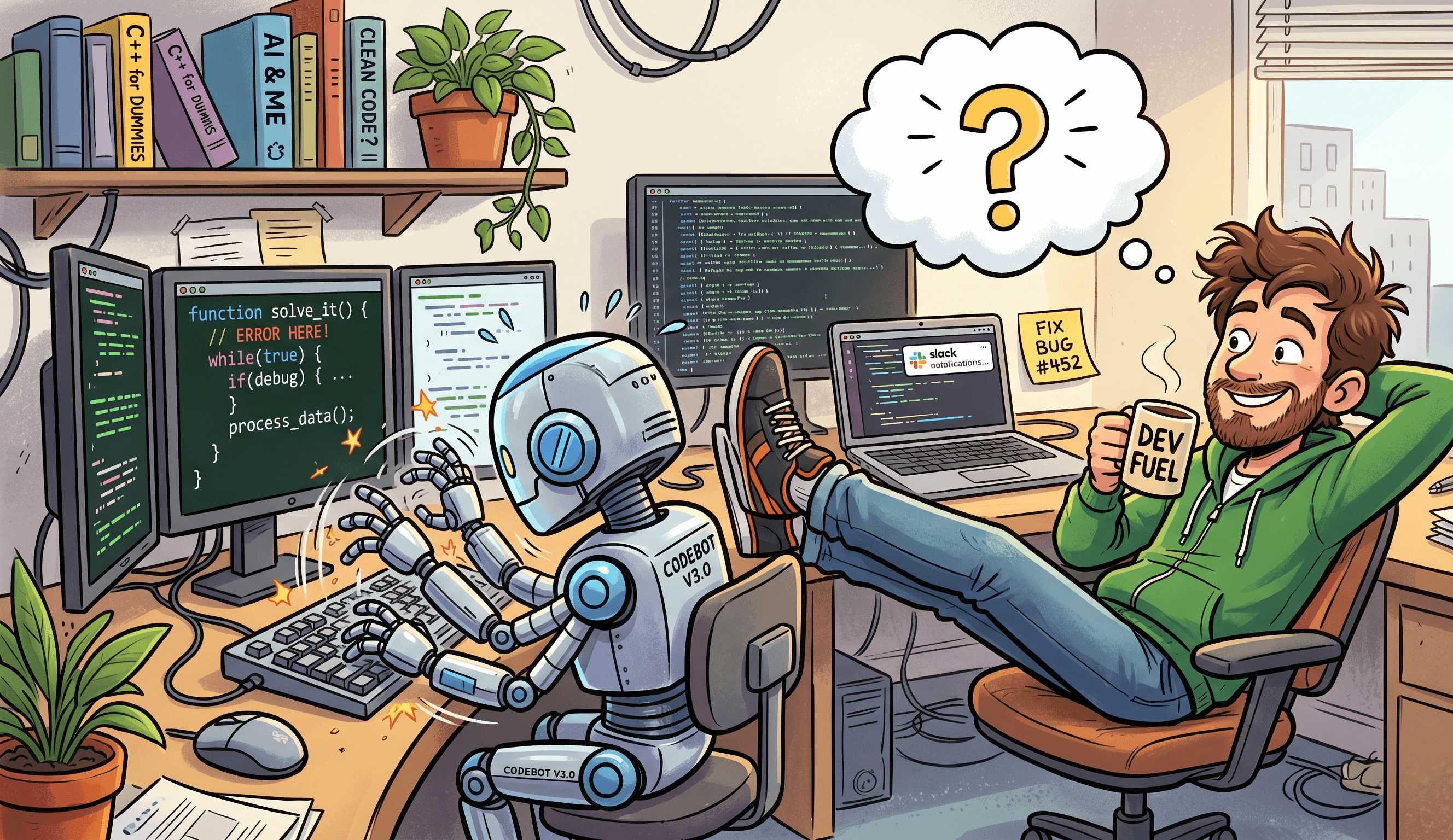
It’s one thing to vibe code a personal to-do list app, but it is a completely different story when you are building enterprise software.
In a production environment, the stakes are high, and big money is involved. When you rely solely on AI generation without understanding the logic, you invite disaster. AI tools are notorious for generating code that looks correct on the surface but is filled with hidden technical debt.
Here is what happens when vibe-coded projects hit the real world:
If you don't understand the architecture and the logic of what you are shipping, you can't securely maintain it. AI is meant to assist your engineering judgment, not replace it.
It is easy to forget that AI coding assistants are not priced per successful feature you ship; they are tied directly to your usage. Every time you send a prompt, read a file, or ask the AI to fix a bug, you are spending tokens.
And when you rely entirely on vibe coding, those tokens burn fast.
Engineers are starting to call this the "token tsunami". When you use AI agents to write your code, they don't just spit out a final answer. They go into loops—they plan, they call tools, they doubt themselves, they retry, and they constantly reload the entire context of your project. Because every new message has to carry the weight of the entire conversation history, a simple 30-minute vibe-coding session can easily chew through 200,000 tokens. As your project grows larger, the token consumption per message scales up, making your costs wildly unpredictable.
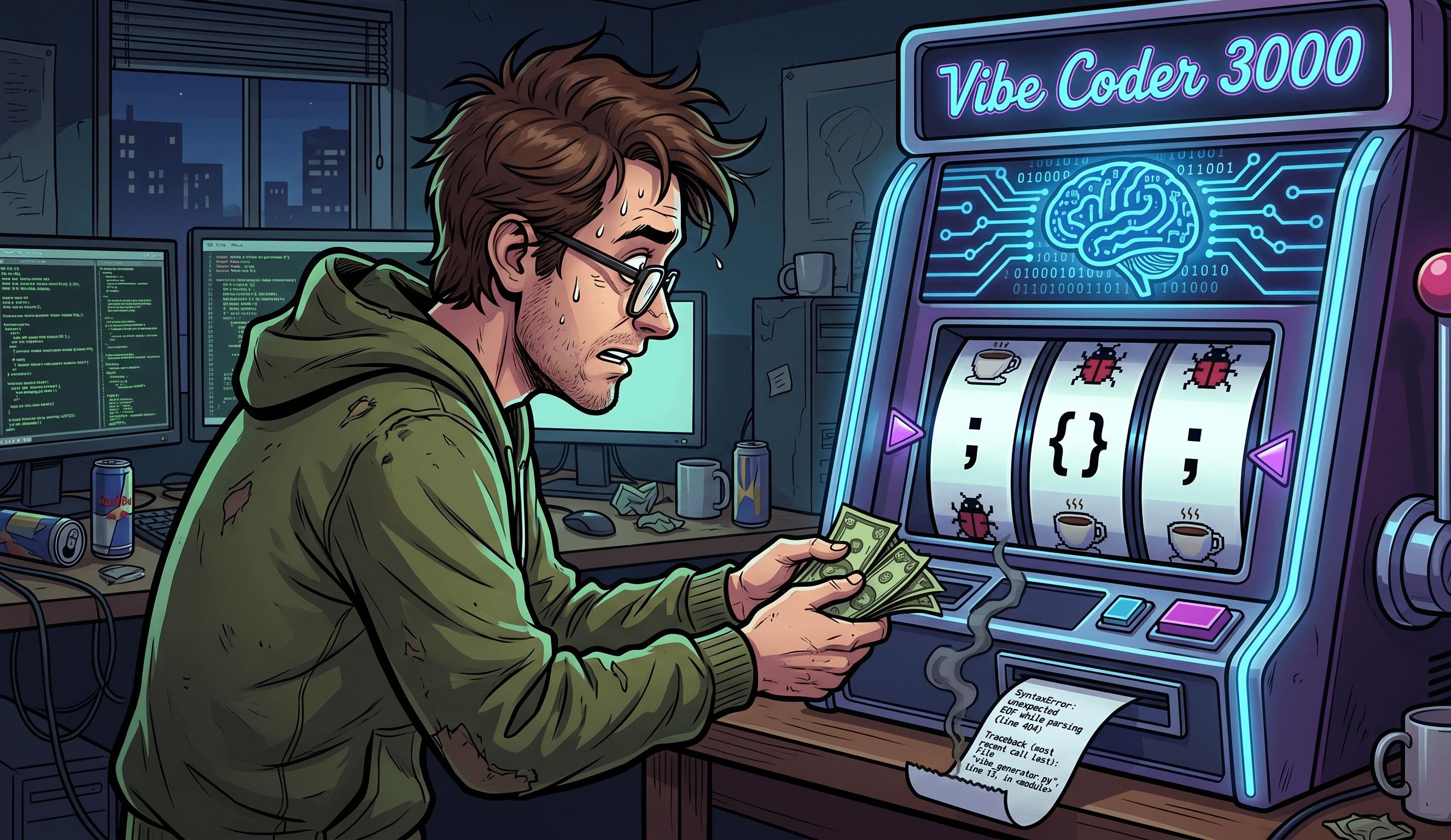
The most frustrating part? You still pay for the AI's "thought process" even when it produces absolute garbage.
If you aren't actively steering the architecture, an AI agent will often confidently hallucinate or get stuck in a repetitive loop trying to fix a bug. It might burn through tens of thousands of tokens just re-checking its own mistakes, only to give you a plausible-sounding but entirely useless piece of code. If you find yourself burning through your monthly AI credits in a matter of days, it is usually because of this exact problem.
Sometimes, using a cheaper AI model and letting it vibe code its way through multiple failed iterations will actually cost you more money than just taking the time to write the correct logic yourself. You end up paying real money just to watch a machine aggressively rewrite the same broken code over and over again.
Recent studies actually back up the feeling that we might be losing our edge. When developers use AI, they undoubtedly ship code faster. But research shows that this speed often comes at the cost of deep comprehension,.
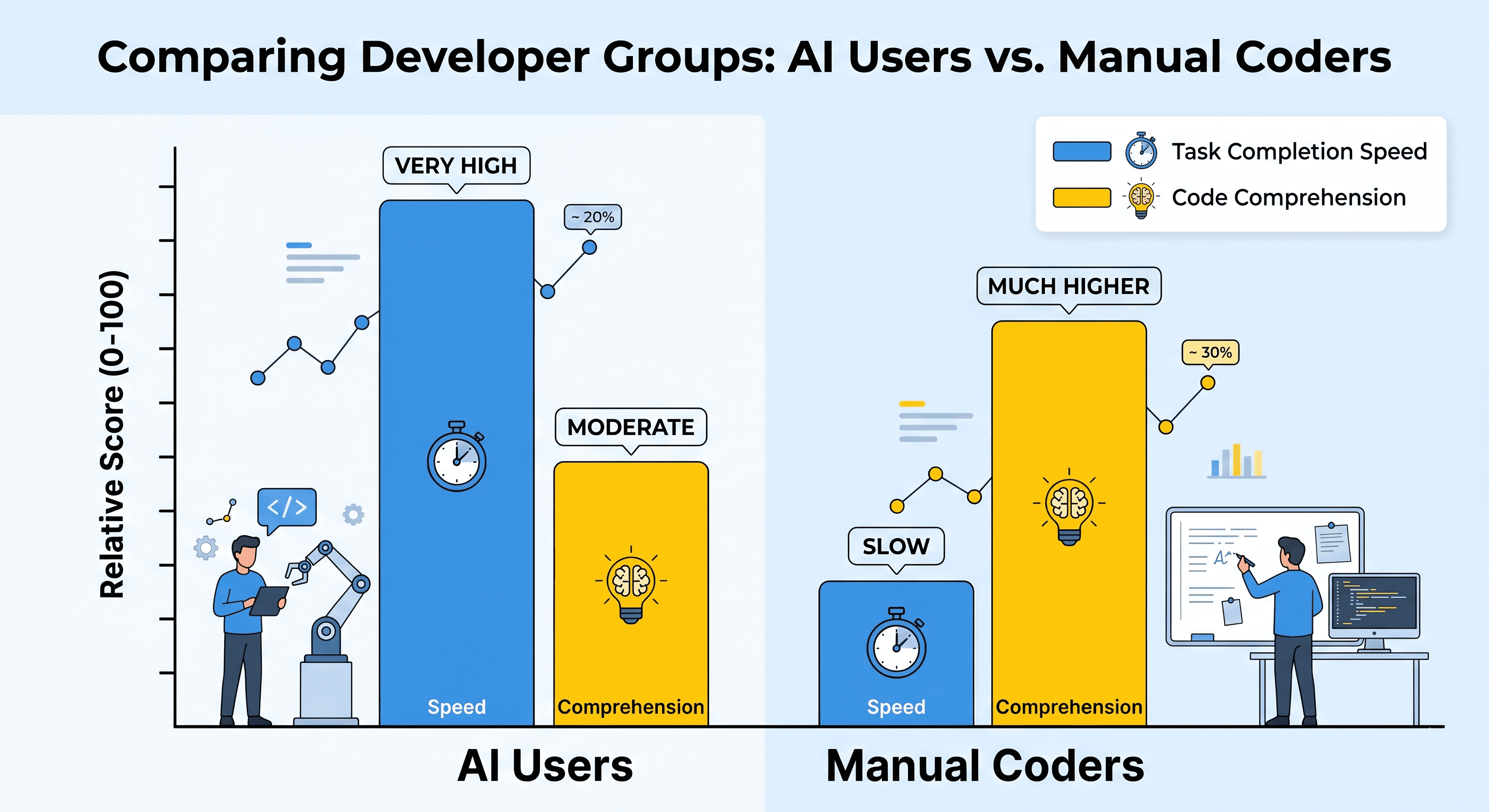
If you don't understand the "why" behind the code, your ability to review pull requests, design scalable systems, and spot invisible errors begins to atrophy,. You stop being a software engineer and start becoming a professional prompter.
So, how do we get the incredible speed benefits of AI at work without letting our brains turn to mush?
You have to actively keep your problem-solving muscles in shape. What I do for my brain exercise is keep a separate IDE (VSCodium) stripped of all AI features, and then I build small projects.
By intentionally turning off the autocomplete, the chat windows, and the generative helpers, I force my brain to remember the syntax. I force myself to read the official documentation, struggle with the logic, and manually debug the errors that pop up. Just like a musician practices their scales on an acoustic instrument, developers need to practice writing raw code.
AI is an incredible tool that is changing our industry for the better. It is helping us ship faster and is opening the doors for a whole new generation of creators.
But at the end of the day, you have to stay in control. You can use AI to write the boilerplate, but you must remain the architect. Don't just vibe code your way through your career, take the time to understand your craft, keep your mind sharp, and always know exactly what your code is doing before you push it to production.